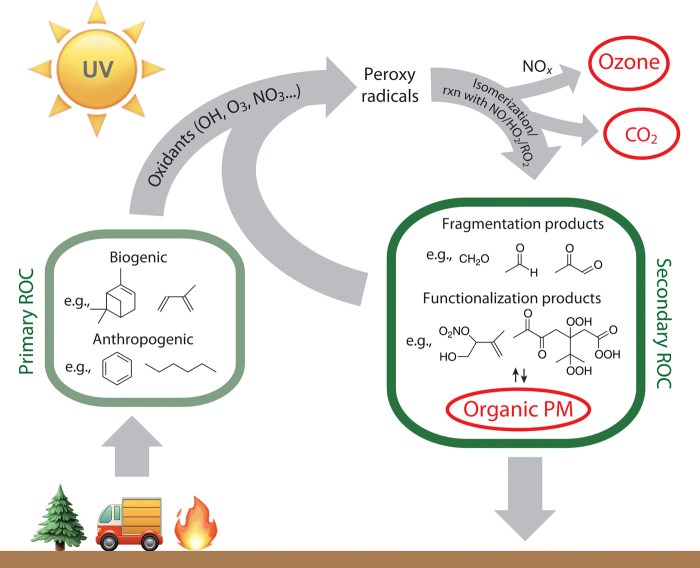
Atmospheric chemistry updates reveal the fascinating dynamics of our planet’s atmosphere, emphasizing its critical role in climate systems and environmental health.
Recent research highlights significant breakthroughs in understanding how pollutants affect atmospheric conditions and contribute to climate change. By utilizing innovative methodologies, scientists are uncovering new insights about the complex interactions within our atmosphere, making this field more important than ever.
Current Research in Atmospheric Chemistry
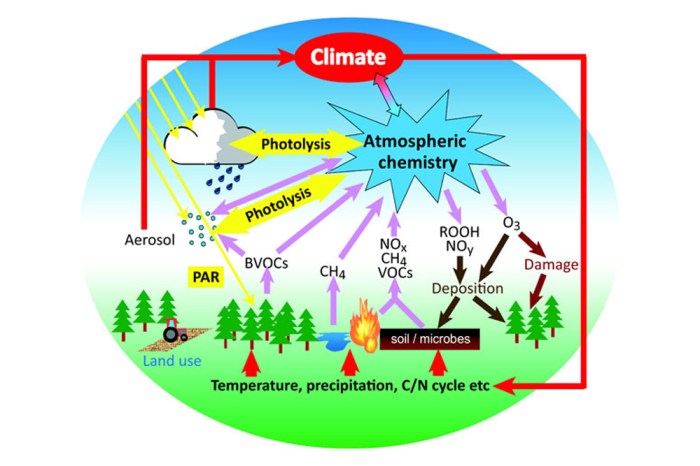
Recent advancements in atmospheric chemistry are shedding light on the complexities of air pollution and its far-reaching implications for climate change. Studies have increasingly demonstrated how atmospheric compounds interact with each other, influencing both human health and global weather patterns. The focus now lies on identifying and mitigating the impact of various pollutants, as well as understanding their behavior in different atmospheric conditions.The latest findings highlight the role of short-lived climate pollutants (SLCPs), such as methane and black carbon, which are known to have a significant warming potential.
Research indicates that reducing these pollutants could lead to immediate benefits in terms of climate stabilization. Additionally, advancements in remote sensing technologies have improved our ability to track these pollutants, allowing for more accurate modeling of their effects on atmospheric conditions and climate change.
Impact of Pollutants on Climate Change
Pollutants play a critical role in altering atmospheric chemistry and, consequently, climate change dynamics. The increase in concentrations of greenhouse gases, particularly carbon dioxide and methane, has direct implications for global warming. This section highlights the ways in which pollutants affect climate systems:
- Methane Emissions: Methane is recognized for its potency as a greenhouse gas, being over 25 times more effective than carbon dioxide over a 100-year period. Recent studies estimate that reducing methane emissions by 30% could help avoid approximately 0.3°C of warming by 2040.
- Black Carbon’s Role: Black carbon, a component of particulate matter, absorbs sunlight and warms the atmosphere. Its reduction is crucial, especially in regions like the Arctic, where melting ice can release more greenhouse gases, leading to a feedback loop of warming.
- Ozone Depletion: Ground-level ozone, formed from pollutants in the presence of sunlight, can harm vegetation and contribute to climate change by affecting the Earth’s radiative balance.
The interconnection between these pollutants and climate systems underscores the urgent need for effective air quality management strategies to mitigate their effects.
Methodologies in Recent Atmospheric Studies
Innovative methodologies have emerged in atmospheric chemistry research, providing deeper insights into the sources and effects of pollutants. These techniques are essential for understanding the complexity of atmospheric interactions. Key methodologies include:
- Remote Sensing: Satellites equipped with advanced sensors monitor atmospheric gases and aerosols globally, providing real-time data on pollution sources and transport.
- Laboratory Simulations: Controlled experiments replicate atmospheric conditions to study the chemical reactions of pollutants, helping to predict their behavior in the environment.
- Field Campaigns: Research teams conduct extensive field studies to collect air samples and analyze pollutant concentrations across various geographies, enabling localized assessments of air quality.
- Modeling Approaches: Computer models simulate atmospheric processes, predicting the impact of different pollutants under various scenarios, which aids in policymaking and regulatory measures.
The integration of these methodologies enhances our understanding of atmospheric chemistry and informs effective strategies for regulating emissions and improving air quality.
Interdisciplinary Connections
Atmospheric chemistry is a dynamic field that transcends traditional scientific boundaries, integrating knowledge from various disciplines. The interplay between atmospheric chemistry and social and empirical sciences underscores the critical importance of understanding our environment and its implications for society. Through this collaboration, researchers can develop comprehensive solutions to pressing global issues like climate change, air quality, and environmental justice.The role of natural and physical sciences in atmospheric research is fundamental, providing the foundational knowledge required to understand atmospheric processes.
These sciences explore the chemical composition of the atmosphere and its interactions with various physical and biological systems. This intersection is crucial for accurate modeling and forecasting atmospheric phenomena, allowing scientists to predict weather patterns and assess the impacts of pollutants.
Social and Empirical Sciences in Atmospheric Chemistry
The integration of social sciences with atmospheric chemistry enhances our understanding of how human behavior influences environmental conditions. By examining societal factors, researchers can gauge public awareness and attitudes toward climate issues, leading to more effective communication strategies and policy decisions. Key areas of connection include:
- Public Health: Investigating the health impacts of air pollution and climate change, leading to informed public health policies.
- Policy Development: Assessing how legislation affects emissions and environmental protection efforts, promoting sustainable practices.
- Community Engagement: Involving local communities in monitoring air quality, fostering a sense of ownership and responsibility toward environmental stewardship.
Natural and Physical Sciences Contribution
Natural and physical sciences play a pivotal role in atmospheric research, providing essential tools and methodologies for analyzing atmospheric phenomena. This collaboration leads to advancements in understanding the dynamics of gases, aerosols, and particulate matter. Notable contributions include:
- Chemical Analysis: Techniques such as chromatography and spectroscopy are used to identify and quantify atmospheric pollutants.
- Climate Modeling: The development of complex models that simulate atmospheric processes, allowing for predictions about future climate scenarios.
- Field Studies: Conducting research in diverse environments, from urban settings to remote areas, to gather empirical data that informs broader atmospheric theories.
Computer Science in Atmospheric Research
Computer science education significantly enhances the modeling of atmospheric phenomena, providing tools for data analysis, visualization, and simulation. The fusion of computer science with atmospheric chemistry has led to the development of sophisticated models that can analyze vast amounts of environmental data. This integration is crucial for:
- Data Management: Efficiently handling large datasets from satellite observations and ground-based measurements.
- Predictive Analytics: Utilizing machine learning algorithms to improve the accuracy of weather and climate predictions.
- Visualization Tools: Developing software that allows researchers to visually interpret complex atmospheric data, aiding in analysis and decision-making.
Emerging Trends and Anomalies
Recent developments in atmospheric chemistry have shed light on various anomalies that challenge longstanding theories and enhance our understanding of the atmosphere’s complex dynamics. These anomalies underscore the need for adaptive scientific approaches and highlight the significant implications they carry for environmental policies and global climate initiatives. As we explore these emerging trends, it becomes crucial to recognize the transformative role of education and interdisciplinary training in addressing the multifaceted challenges posed by atmospheric chemistry.
Recent Anomalies Observed in Atmospheric Data
Anomalies in atmospheric data have become increasingly apparent, raising questions about conventional atmospheric models. These variations often manifest as unexpected fluctuations in greenhouse gas concentrations, shifts in seasonal weather patterns, and unusual ozone depletion events. Notable examples include:
- Increased Methane Emissions: Recent satellite data indicates that methane levels have surged by 12% since 2000, exceeding predictions based on traditional models. This anomaly suggests that current assessments may overlook significant sources of methane, such as wetlands and agricultural practices.
- Ozone Layer Recovery Observations: While the Montreal Protocol has been successful in curbing chlorofluorocarbon (CFC) emissions, recent studies reveal localized anomalies in ozone recovery rates. Some regions are experiencing slower recovery due to the influence of climate change and other atmospheric interactions.
- Extreme Weather Events: Anomalously high temperatures and unpredictable weather patterns have been recorded, deviating from historical averages. These events challenge the established understanding of climate models and emphasize the need for updated predictive frameworks.
Comparison of Traditional Atmospheric Chemistry Theories with Alternative Scientific Views
The landscape of atmospheric chemistry is increasingly characterized by contrasting perspectives on how to interpret data and predict future trends. Traditional theories often rely on well-established chemical processes and historical data, while alternative views incorporate real-time data analytics and complex systems thinking. The differences can be summarized as follows:
- Traditional Models: These models typically focus on linear relationships between atmospheric components, like the role of carbon dioxide and its direct correlation with temperature increases. However, they may fail to account for non-linear feedback loops present in the system.
- Alternative Approaches: Emerging scientific viewpoints advocate for integrating machine learning and big data analytics, which allow for the identification of patterns that traditional methods may miss. This adaptive methodology can enhance predictive capabilities and inform policy decisions more effectively.
Importance of Education and Training in Atmospheric Chemistry Challenges
Addressing the complexities of atmospheric chemistry necessitates a robust educational framework that fosters interdisciplinary collaboration and innovation. Several key points highlight the importance of education and training in this field:
- Skill Development: Incorporating diverse skill sets in atmospheric science education, including data analysis, policy-making, and community engagement, equips future scientists with the tools needed to tackle real-world problems effectively.
- Interdisciplinary Collaboration: Engaging students and researchers from various disciplines—such as meteorology, environmental science, and social sciences—promotes a holistic understanding of atmospheric phenomena and the socio-economic factors influencing them.
- Public Awareness: Educational initiatives aimed at increasing public awareness of atmospheric challenges can drive grassroots advocacy and support for environmental policies that address climate change and air quality issues.
The integration of education and real-time data analysis will be crucial in advancing our understanding of atmospheric chemistry and its impact on global environments.
Ultimate Conclusion
In conclusion, the evolving landscape of atmospheric chemistry is a testament to the collaboration of various scientific disciplines. As we continue to observe emerging trends and address anomalies, the significance of education and interdisciplinary approaches will be crucial in tackling the challenges posed by atmospheric changes.
FAQ
What are the main pollutants affecting the atmosphere?
Common pollutants include carbon dioxide, methane, sulfur dioxide, and nitrogen oxides, which significantly impact climate and air quality.
How does atmospheric chemistry relate to climate change?
Atmospheric chemistry studies how various gases and particles influence the Earth’s climate, including greenhouse gas effects and aerosol interactions.
What role does computer science play in atmospheric studies?
Computer science contributes to atmospheric studies by developing models that simulate atmospheric processes and analyze large datasets for better predictions.
Why are anomalies in atmospheric data important?
Anomalies can indicate significant changes or trends in atmospheric behavior, providing critical insights into potential environmental issues.
How can education improve our understanding of atmospheric chemistry?
Education fosters awareness and understanding of atmospheric chemistry, equipping future scientists with the knowledge needed to address ongoing environmental challenges.


